
 English
 русский
 عربى
عربى
In terms of functionality, our Bamboo Nut Tray comes in two different options to suit your needs. The option is a three-compartment tray, allowing you...
See DetailsWalnut and the Rise of Natural Kitchen Serveware
Something shifted in the kitchenware market over the past few years. Plastic and stainless steel still fill plenty of cabinets, but the fastest-growing segment is something far older: wood. The global wooden tableware market is projected to grow at a compound annual growth rate of 6.2% from 2025 to 2031, driven by consumer demand for sustainable, natural alternatives to plastic and synthetic materials. review the full wooden tableware market growth forecast.
Within that trend, walnut has emerged as the standout choice for salad bowls. Its deep, warm coloration and distinct grain character put it several steps above the generic "wooden bowl" category, and its physical properties make it genuinely well-suited to daily kitchen use. For anyone weighing options across the wide range of wooden salad bowl collection for everyday serving, walnut is consistently the top reference point—understanding why helps clarify what to look for and what you are actually buying.
Content
Walnut's reputation in kitchenware is built on three converging strengths: visual character, structural performance, and sensory distinctiveness—none of which other common wood species match in the same combination.
Color and grain. Black walnut produces one of the most visually dramatic grain profiles of any North American hardwood. The heartwood ranges from a rich chocolate brown to warm dark brown, typically streaked with lighter tan sapwood along the edges. This contrast—dark center, lighter border—is a natural pattern unique to each piece and part of what makes walnut bowls genuinely irreplaceable as table objects. Unlike cherry, which starts pale and deepens over years, walnut arrives with its full depth of color already developed.
Hardness and density. Walnut scores 1,010 on the Janka hardness scale—a standard measure of a wood's resistance to denting and surface wear. That rating places it firmly in the hardwood category, dense enough to resist the daily abrasion of utensils and tossing without developing the surface grooves that harbor moisture and bacteria. It is not the hardest wood used in kitchen products—maple and oak rank higher—but its balance of hardness and workability makes it easier to shape into the curved forms a salad bowl requires without sacrificing durability.
Natural aroma. This is where walnut stands apart from every other bowl wood. Black walnut has a mild, distinctive nutty scent that no other common hardwood replicates. Food prepared and served in a walnut bowl can absorb trace amounts of that character over time, adding a subtle depth that enthusiasts specifically seek out. For most people it is barely perceptible; for those who notice it, it becomes one of the reasons they return to walnut. Understanding which woods work best across different kitchenware applications is worth exploring—which woods are best suited for making food tableware covers the broader landscape of hardwood choices in kitchenware manufacturing.
No wood is right for every buyer. Comparing walnut against the other leading salad bowl hardwoods clarifies where each performs best.
Walnut vs. Acacia. Acacia is arguably walnut's closest rival in the premium salad bowl category. It is harder (Janka score typically around 1,700–2,300 depending on species), highly water-resistant, and produces a striking golden-to-reddish-brown grain with swirling patterns. Acacia bowls are often more affordable than walnut for comparable sizes because acacia grows quickly and is widely cultivated. The tradeoff: acacia's grain variation can be more irregular, and it lacks walnut's signature deep brown richness. For buyers who want durability and affordability with visual impact, acacia wood salad bowl as an alternative hardwood option is a compelling choice alongside walnut.
Walnut vs. Cherry. Cherry starts as a pale pinkish-tan and deepens to a rich reddish-brown over years of use and light exposure—a transformation many buyers find deeply appealing. It has a finer, smoother grain than walnut and a slightly lower Janka score (995), making it marginally softer but easier to finish to a high sheen. Cherry is the wood for buyers who want a bowl that evolves visually over a lifetime. Walnut, by contrast, delivers its full visual presence immediately.
Walnut vs. Maple. Maple is the workhorse of the hardwood kitchen category—pale cream, uniformly grained, and extremely hard (Janka 1,450). It is the go-to for chopping bowls and high-abuse applications where durability outweighs aesthetics. As a salad bowl for table display, maple can feel visually flat next to walnut's depth of color. Buyers prioritizing function over appearance lean toward maple; buyers who want the bowl to be part of how the table looks lean toward walnut.
A walnut salad bowl's safety profile depends on two things: the wood itself and whatever finish has been applied. Walnut is a close-grained hardwood, which means its surface pores are tight enough to resist liquid penetration and bacterial accumulation—a key reason hardwoods like walnut, maple, and cherry are the woods specifically referenced in food safety guidance for kitchen contact surfaces.
The finish matters as much as the wood. A bowl intended for food use should be treated only with food-grade, non-toxic oils—mineral oil, pure walnut oil, beeswax, or food-grade tung oil are the standard options. These penetrating finishes soak into the wood fibers, nourish the surface from within, and form a protective barrier without sitting on top of the wood as a film coating that could chip or peel into food. Any bowl finished with lacquer, polyurethane varnish, or paint should not be used as a food vessel—these coatings are surface films, not penetrating treatments, and their integrity degrades with washing.
When purchasing, look for explicit confirmation that the finish is food-grade. Reputable manufacturers specify this in product descriptions. If no finish information is provided, treat the bowl as a decorative object until you can confirm its food safety or apply a food-grade oil yourself.
Walnut is a forgiving material, but it responds to moisture the way all wood does: prolonged exposure causes swelling, warping, and eventually cracking along the grain. The care routine for a walnut salad bowl is straightforward and requires only a few minutes after each use.
Washing. Hand wash only, with warm water and a small amount of mild dish soap. Rinse quickly and dry with a clean towel immediately—do not leave the bowl to air dry or allow water to pool in the interior. Never place a walnut bowl in a dishwasher. The combination of sustained heat, steam, and harsh detergent is sufficient to split even a well-made bowl within a few cycles.
Oiling. A walnut bowl should be oiled with food-grade mineral oil or walnut oil when the surface begins to look dry or faded—typically every four to six weeks with regular use, or whenever the wood loses its sheen. Apply the oil generously with a soft cloth, let it absorb for 20–30 minutes, then wipe away any excess. This step prevents the wood from drying out and cracking, and it restores the grain's natural depth and luster. Consistent oiling is the single most important factor in how long a walnut bowl lasts.
Storage. Store the bowl in a dry, well-ventilated location away from direct sunlight and heat sources. Sustained UV exposure fades walnut's characteristic dark color over time. Avoid stacking heavy objects inside or on top of the bowl when storing, as pressure on a curved form can cause stress fractures along the grain.
What to avoid. Do not use the bowl for highly acidic foods (citrus-based dressings, vinegar marinades) over extended periods without re-oiling afterward—acids accelerate the drying of the wood surface. Do not soak the bowl in water for any reason. And do not attempt to repair surface scratches with sandpaper unless you are prepared to re-finish the entire interior with food-grade oil afterward.
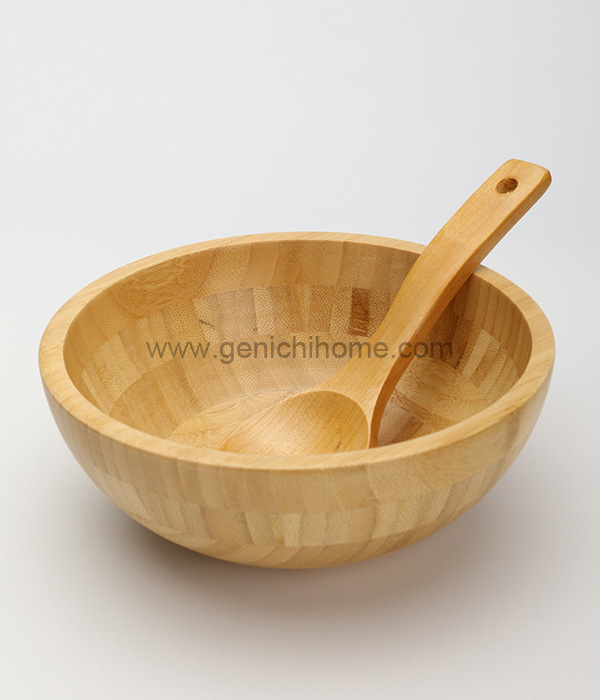
Walnut salad bowls come in two primary interior geometries, and the difference is functional rather than merely aesthetic.
A round-bottomed salad bowl for classic tossing technique has a curved interior that funnels ingredients toward the center as you toss. This shape is designed specifically for mixing—the curved wall guides utensils in a natural arc, and greens, dressings, and toppings distribute evenly without ingredients escaping over the rim. For anyone using the bowl actively to dress and toss a composed salad at the table, round-bottomed is the more functional choice.
A flat-bottomed salad bowl designs for stable table serving prioritizes stability and a lower center of gravity. The flat base sits securely on the table without rocking, makes the bowl easier to set down one-handed, and provides a more generous usable volume at the widest diameter. Flat-bottomed bowls are practical for serving—food stays accessible and the bowl does not shift when guests help themselves from the side.
On sizing: a bowl between 10 and 12 inches in diameter serves four to six people comfortably for a mixed green salad. Fourteen inches and above handles six to ten people and doubles as a serving bowl for grain salads, pasta, or fruit. The deeper the bowl relative to its diameter, the better it handles dressings and loose ingredients without splashing during tossing.
A walnut salad bowl well-chosen and consistently maintained is a piece of kitchen equipment that spans decades. The wood deepens slightly with use, the grain becomes more familiar, and the bowl develops a patina that mass-produced serveware never achieves. That trajectory—an object that gets more itself over time—is what distinguishes a genuine hardwood bowl from everything else on the market.
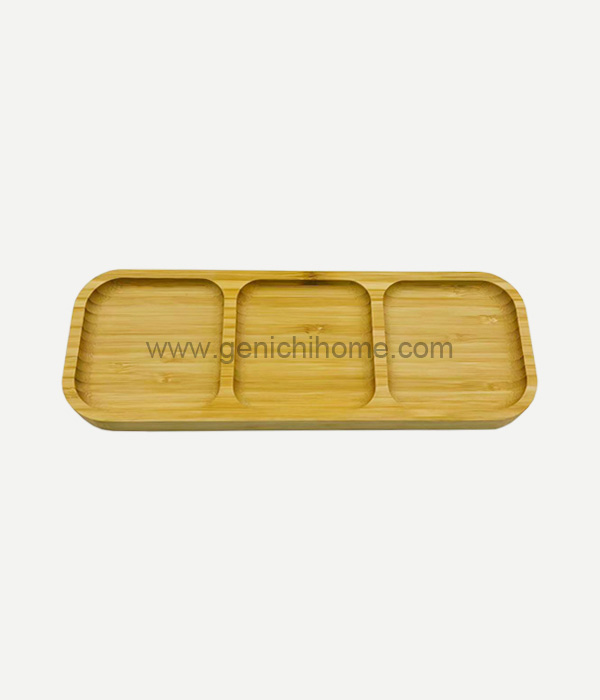
In terms of functionality, our Bamboo Nut Tray comes in two different options to suit your needs. The option is a three-compartment tray, allowing you...
See Details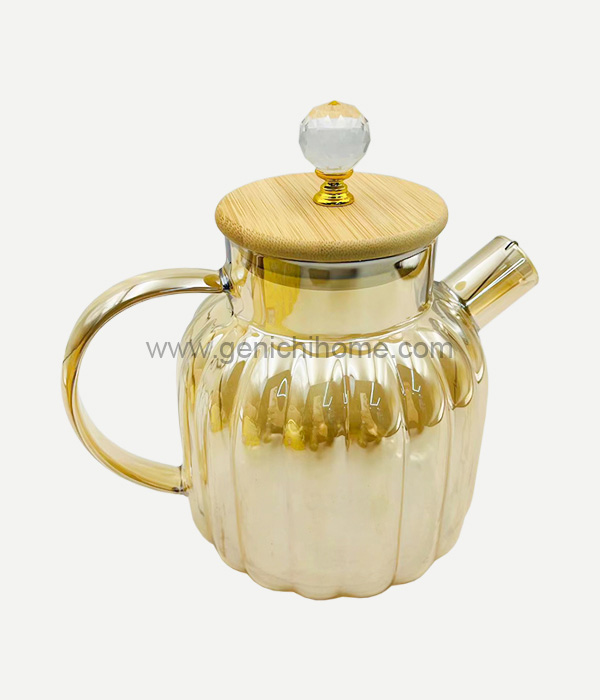
1500ml Capacity: Perfect for personal use or smaller get-togethers, this size offers convenience without compromising on style and functionality.
See Details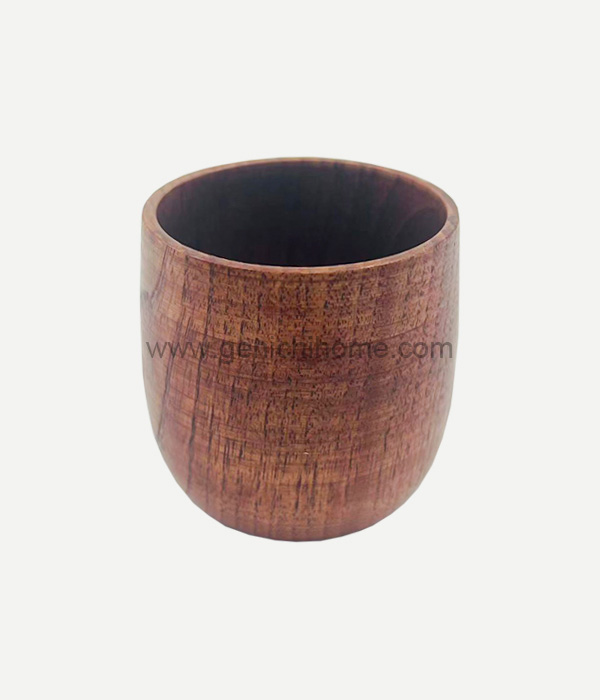
In addition to its aesthetic appeal, the Bamboo and Wood Cup is also eco-friendly. Made from sustainable materials, it is a greener alternative to con...
See Details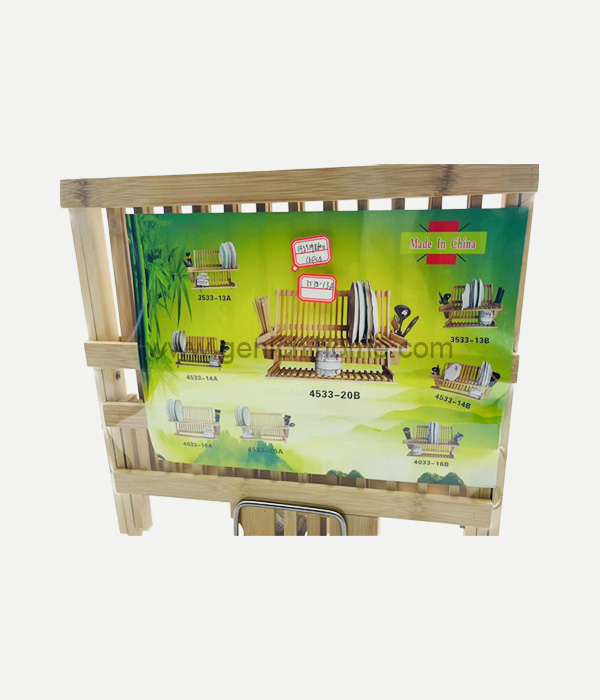
Our Bamboo Cutlery Holder is a practical and eco-friendly solution for organizing and drying your bowls and cutlery,providing ample space to hold your...
See Details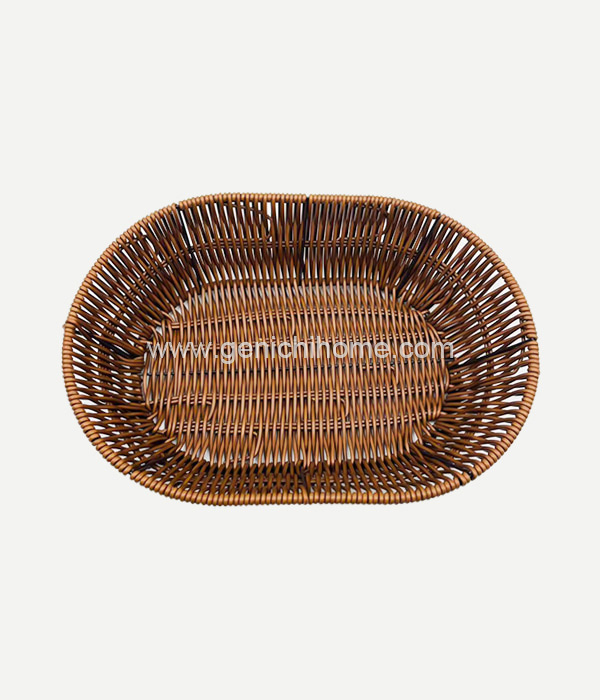
Rattan weaving products are our main recommended series. This product is woven with sturdy and beautiful shapes. Whether it's storage baskets or fruit...
See DetailsContact Us
Address: Room 1805, Communication Service Industrial Park, No. 183, Wenhui Road, Gongshu District, Hangzhou City, Zhejiang Province
E-mail: [email protected]
QUICK LINKS

